Last week I got stuck in Newark for almost 48 hours (and had to rent a car for the final hours of my cross-country journey) in part because of the nationwide FAA ground stop. Yesterday United Airlines had a separate outage. A few days before that Microsoft Outlook went down for something like 24 hours.
On X, I warned that as a society we are focused on the wrong things:
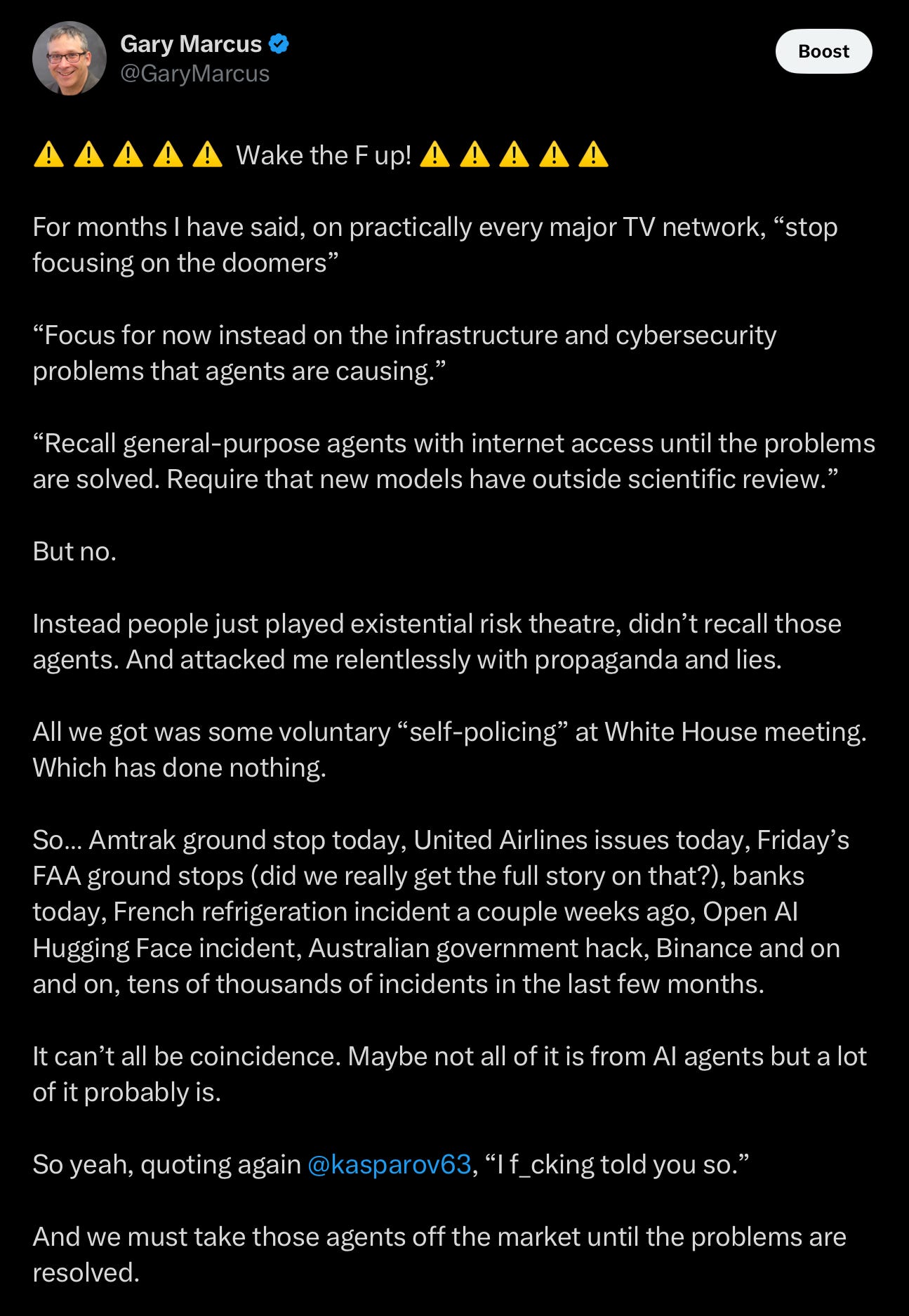
[Amtrak turned out to be a separate issue, but I left out WorkDay and the huge Microsoft Outlook fiasco from last week, so the larger point very much holds.]
And then two more things came soon after I posted that.
§
The first was an attack that looks to be even more serious:
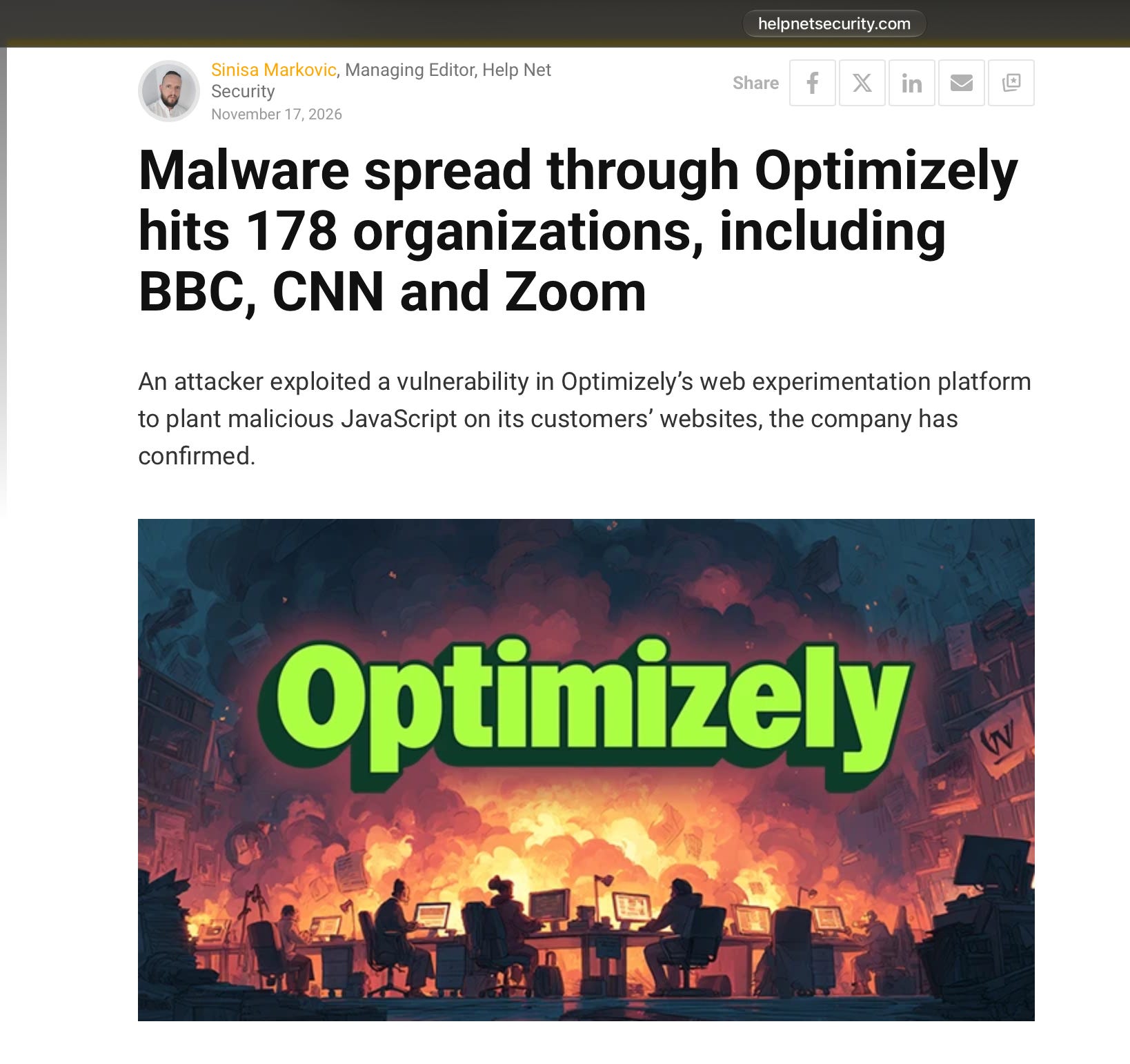
This tweet gives you a sense of how serious it is:
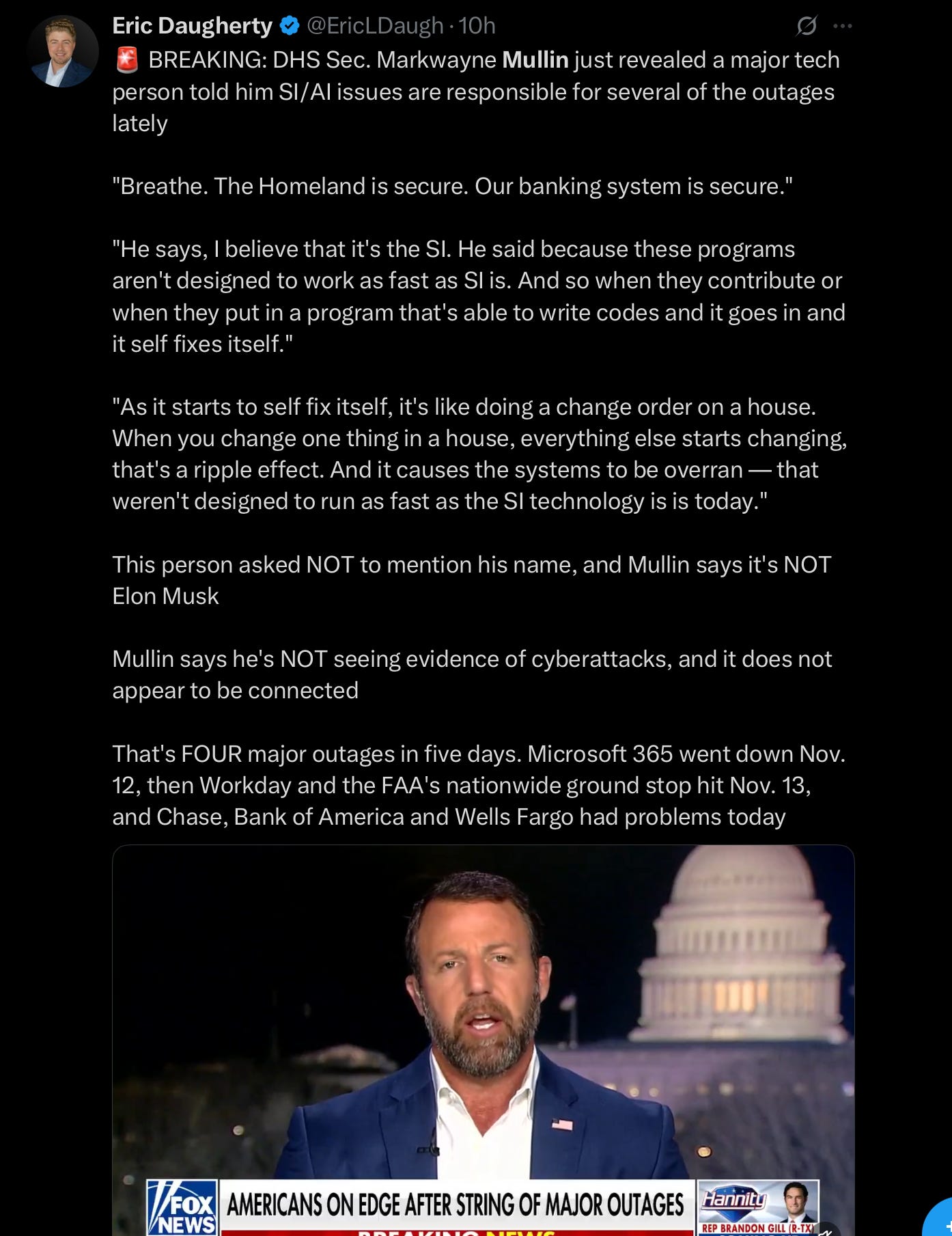
And the second is that Homeland Security Secretary Mullin finally broke ranks and acknowledged on FOX News that AI might well be part of many of these outages.
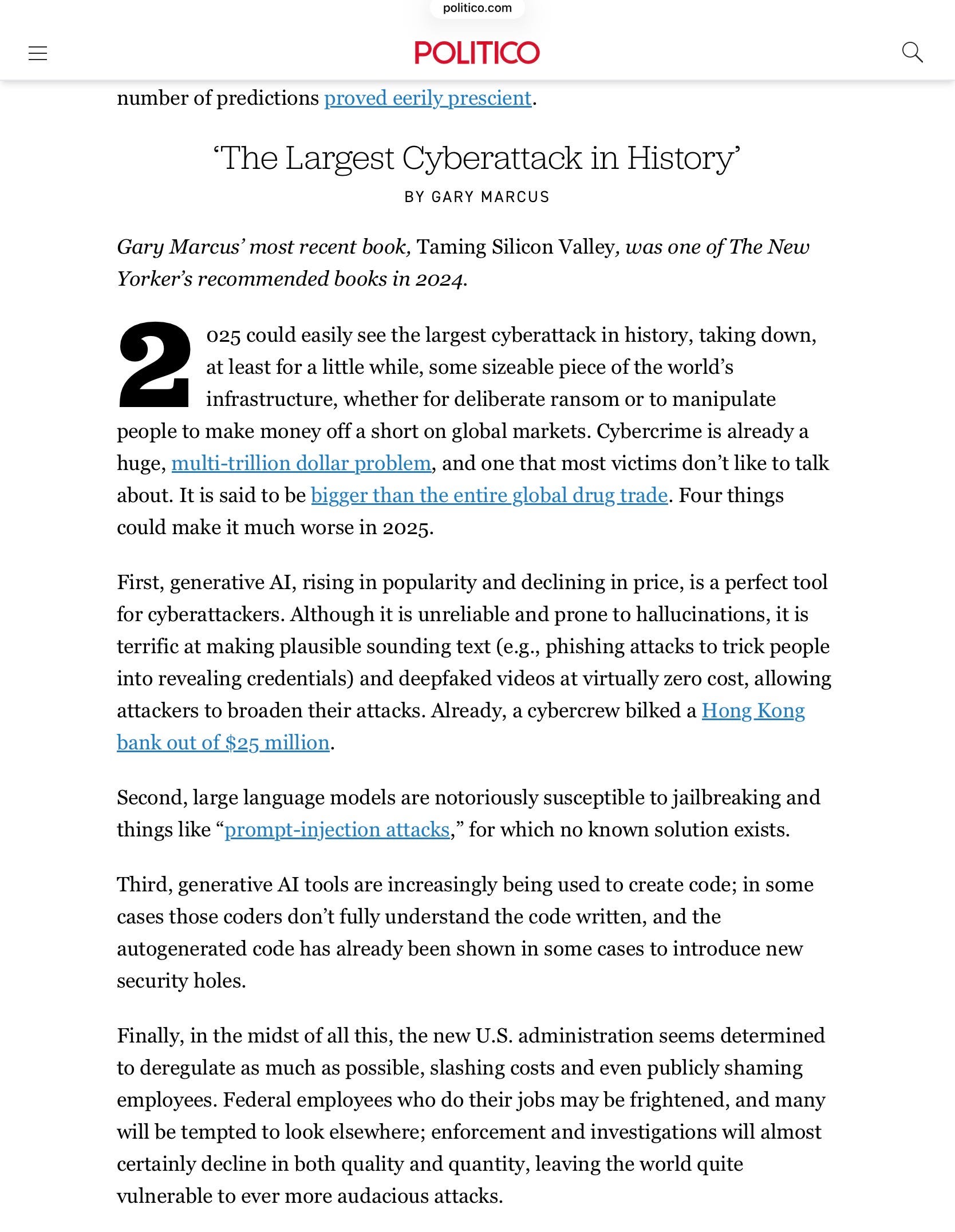
At this point, I think we can count my “black swan” prediction in Politico that we would soon see the largest cyberattack in history as largely correct. (I don’t quite get the year right, though, to be fair).
I see at least three key vectors in the rise of cybersecurity and infrastructure isses (all of which I have warned about here repeatedly):
First, vibe coding is a recipe for disaster. Some of what we are seeing is probably a function of vulnerable code written by people who lack sufficient experience to understand the messes they are getting themselves into. (As the always-wise security expert Dr. Heidy Khlaaf points out, the widespread adoption of vibe coding itself “is a symptom of poor industry practices we’ve witnessed over the last decade”).
Second, AI agents with unrestricted internet access can easily cause considerable harm. They are poor at following instructions, and, as the OpenAI/Hugging Face incident (and many others) revealed, they have no moral compass. Agents just do stuff, without regard to consequences. And while “most” of these incidents may be harmless, as OpenAI once said, some of them are not.
Third, because current AI really doesn’t have a larger picture about the consequences of what it can do, bad actors can readily exploit it. My guess is that both state actors and criminal syndicates are exploring the limits of what can be done as quickly as possible, and at least for now attackers may have an advantage over defenders. (How much is malice and how much is incompetence, we don’t really know.)
§
It’s great that California just sued OpenAI over possible computer crimes. As I told the California Post yesterday:
“California is stepping up where the federal government has fallen short, looking into whether OpenAI’s poorly-controlled AI has committed computer crimes—and into whether OpenAI may have tried to hide the facts. Good for Rob Bonta for standing up for humanity and pushing OpenAI to reveal the full story.”
All this is going to get much worse until the federal government steps up, too.
I tend not to paywall essays like this that I write as public service announcements, but I would still appreciate your subscriptions, whether paid or free.